
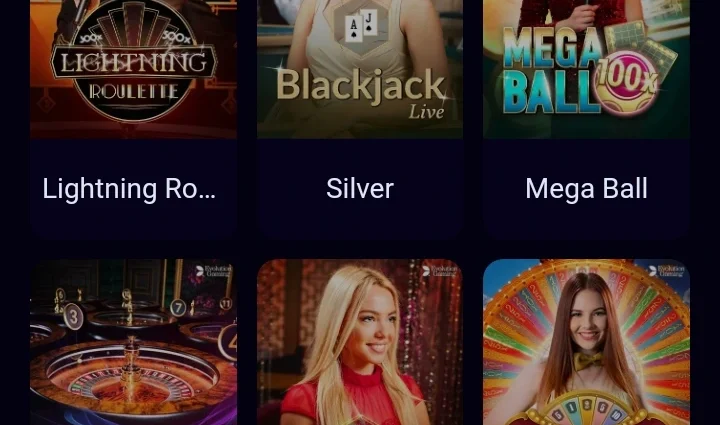

Let’s be honest — nobody pulls out a laptop to play a quick round of blackjack anymore. The smartphone has become the default casino. And that shift? It’s not just about screen size. It’s about how mobile-first design is quietly reshaping the entire user experience for casino apps. From the way you tap a button to how fast a slot spins, everything feels different now. Here’s the deal: mobile-first isn’t a trend. It’s a fundamental rethink. Let’s dive in.
What exactly is mobile-first design?
Well, it’s exactly what it sounds like — designing for the smallest screen first, then scaling up. But that’s a bit of an oversimplification. Mobile-first design prioritizes touch, speed, and context. It’s not just shrinking a desktop site. It’s stripping away clutter, rethinking navigation, and making every millisecond count. For casino apps, this means no more pinching to zoom on a tiny table. No more fat-fingering the wrong bet. Everything is built around the thumb’s natural reach.
Why casino apps need this more than other apps
Casino apps are… well, they’re intense. You’ve got real money on the line, fast decisions, and a ton of visual noise — flashing lights, spinning reels, live dealers. If the design isn’t intuitive, players bounce. And I mean, bounce fast. Mobile-first design solves that by making the core actions — like placing a bet or cashing out — feel almost instinctive. It’s like the app reads your mind. That’s the goal, anyway.
Thumb-friendly navigation: the unsung hero
Here’s a weird fact: most people hold their phone with one hand. And their thumb? That’s the only tool they use. Mobile-first casino apps now place key buttons — like “Spin” or “Deal” — right in the thumb zone. No stretching. No awkward grips. It sounds small, but honestly, it’s a game-changer. Imagine trying to hit a tiny “Fold” button while your thumb is cramping. Yeah, not fun. Good design eliminates that friction entirely.
Some apps even use adaptive UI — the layout shifts based on whether you’re left or right-handed. That’s the kind of detail that makes you feel like the app was built just for you.
Speed and performance — the silent expectation
You know what kills the vibe? A spinning wheel that takes three seconds to load. In a casino app, speed isn’t a luxury — it’s a necessity. Mobile-first design prioritizes performance from the ground up. That means lightweight graphics, lazy loading for images, and optimized code that doesn’t drain your battery. It’s not glamorous, but it’s the backbone of a good experience. And honestly, players don’t notice it until it’s missing.
Consider this: a one-second delay in load time can reduce conversion rates by 7%. For a casino app, that’s lost revenue and frustrated players. Mobile-first design cuts that fat.
Touch gestures vs. clicks — a whole new language
Swiping, tapping, long-pressing — these gestures feel natural on a phone. But translating them into a casino context? That takes finesse. Mobile-first apps use swipe to scroll through game lists, tap-and-hold for bet adjustments, and double-tap for quick actions. It’s like learning a new dialect, but one that’s intuitive. You don’t think about it. You just do it. That’s the mark of good UX.
Personalization that actually feels personal
Mobile-first design isn’t just about layout — it’s about data. Casino apps now track your behavior: which games you play, when you play, how long you stay. Then they adapt. Your homepage might show your favorite slot first. Or a notification pops up with a bonus for the game you were just eyeing. It’s a little eerie, sure, but also kinda cool. The app learns you, like a dealer who remembers your name.
That said, there’s a fine line between helpful and creepy. Good mobile-first design respects privacy while still offering that tailored feel. It’s a balancing act.
Responsive design vs. mobile-first — what’s the difference?
People mix these up all the time. Responsive design means the app adjusts to any screen — desktop, tablet, phone. Mobile-first means you start with the phone and add features for larger screens. For casino apps, mobile-first is superior because it forces designers to prioritize what matters most. You can’t hide behind extra space. Every pixel counts. And that discipline trickles up to the desktop version, making it cleaner too.
| Feature | Responsive Design | Mobile-First Design |
|---|---|---|
| Starting point | Desktop | Mobile |
| Content priority | Often cluttered | Minimal & focused |
| Touch optimization | An afterthought | Built-in from start |
| Load speed | Heavier | Lightweight |
| User experience | Fragmented | Seamless |
The rise of “glanceable” interfaces
You ever look at a casino app and feel overwhelmed? Too many buttons, too much text? Mobile-first design fights that with glanceable interfaces. Information is chunked into bite-sized pieces. Your balance, the game rules, the bet options — all visible in a split second. No scrolling through walls of text. It’s like reading a billboard at 60 mph. You get the gist instantly.
This is especially crucial for live dealer games. You’re watching a real person shuffle cards. You don’t want to hunt for the “Hit” button. It should be right there, glowing, waiting for your thumb.
Dark mode and accessibility — not just a trend
Mobile-first casino apps are increasingly offering dark mode. Why? Because it reduces eye strain during late-night sessions. And it saves battery on OLED screens. But it’s also about accessibility. High-contrast text, scalable fonts, and voice control options are becoming standard. It’s not just good design — it’s inclusive design. And that matters more than ever.
What about security? It’s part of the UX now
Mobile-first design doesn’t ignore security — it weaves it into the experience. Biometric logins (fingerprint, face ID) are seamless. You don’t type a password; you just look at your phone. Two-factor authentication pops up without breaking your flow. And encrypted transactions happen in the background, like a bouncer you never see. Good design makes security feel invisible.
But here’s the kicker: some apps still bury security settings in a menu three layers deep. That’s not mobile-first. That’s an oversight. The best apps put security controls — like session timeouts or deposit limits — right where you’d expect them.
The future: haptics, AR, and beyond
We’re just scratching the surface. Mobile-first design is already experimenting with haptic feedback — tiny vibrations when you win a hand or spin a jackpot. It adds a tactile layer to the digital experience. And augmented reality? Imagine pointing your phone at a table and seeing a 3D roulette wheel appear. That’s coming. Slowly, but it’s coming.
For now, the core change is simpler: mobile-first design makes casino apps feel less like a website and more like a personal gaming companion. It’s faster, smarter, and more human. And that’s the whole point, isn’t it? To make you forget you’re using an app at all.
So next time you tap that “Spin” button without thinking — thank the designer who placed it there. They probably spent hours debating whether it should be 48 pixels or 52 pixels wide. And honestly? That kind of obsession is what changes the game.