
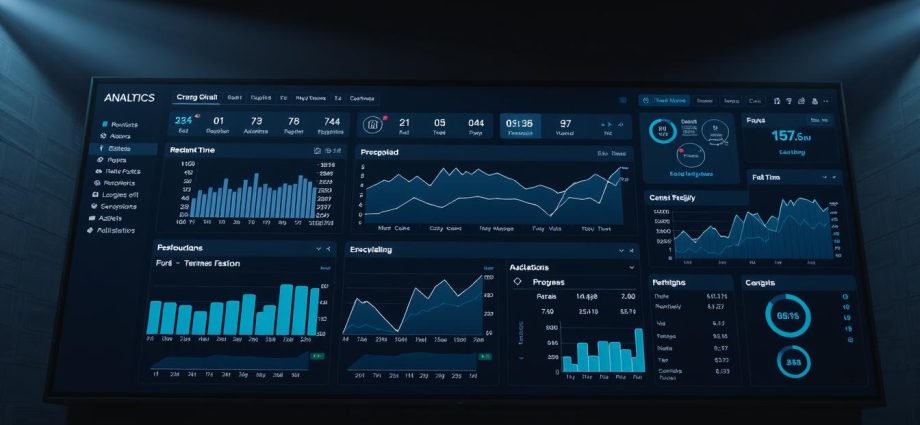

For decades, sports betting was a world ruled by intuition, hunches, and that deep-seated loyalty to your home team. You know the feeling. You’d pore over the newspaper stats, listen to the pundits, and make a call based on… well, a mix of hope and fragmented logic. It was more art than science.
That’s changing. Fast. Today, a seismic shift is underway, moving the needle from the gut to the algorithm. We’re talking about using data analytics and AI models for predictive sports betting. It’s not about replacing the passion of the game with cold numbers. It’s about using those numbers to see the game in a whole new light.
From Box Scores to Big Data: What’s Really in the Playbook?
So, what does “data” mean here? Honestly, it’s moved far beyond simple win-loss records or a player’s batting average. We’re now dealing with a torrent of structured and unstructured information that AI can chew through in milliseconds.
Think about it: player tracking data (like NBA Second Spectrum or MLB Statcast), real-time biometrics from wearables, historical betting line movements, weather conditions, travel schedules, social media sentiment, even officiating tendencies. The volume is staggering. The human brain simply can’t process it all to find meaningful, predictive edges. That’s where the machines come in.
The AI Power Players: Machine Learning & Predictive Modeling
At its core, this approach uses machine learning (ML) models—a subset of AI—to find patterns in historical data that can forecast future outcomes. It’s like teaching a computer to be the world’s most disciplined, unbiased sports fan. Here’s a quick breakdown of how these models work in this space:
- Regression Models: These predict a numerical value, like the total points in a game. They might analyze pace of play, defensive ratings, and historical head-to-head totals.
- Classification Models: These place outcomes into categories. Will Team A win or lose? Will the game go over or under? They classify based on learned probabilities.
- Neural Networks: More complex, these mimic the human brain (loosely!) to find non-linear, hidden relationships in massive datasets—like how a minor ankle injury for a key defender might disproportionately affect the point spread.
The model is trained on years of data, learns, and then is tested on unseen data to check its accuracy. The goal isn’t perfection—sports are beautifully chaotic—but consistent, probabilistic insight.
The Real-World Edge: Where Data Analytics Hits the Court
Let’s get concrete. How does this actually look for someone trying to make more informed bets? Here are a few tangible applications.
| Application | How It Works | Example |
| Player Prop Betting | AI models analyze individual matchup data, usage rates, and situational history. | Predicting a receiver’s yards against a specific CB who struggles against a certain route. |
| In-Game (Live) Betting | Models process real-time data (score, possession, momentum) to adjust probabilities instantly. | Recalculating the win probability after a key injury or a sudden shift in game script. |
| Market Inefficiency Spotting | Comparing model-generated odds to actual betting market odds to find value. | The model says Team B has a 55% chance, but the public money on Team A creates odds that imply only a 48% chance. That’s an edge. |
One of the biggest pain points for bettors is emotional bias. We love our teams. We get swayed by a recent highlight reel. AI has no allegiance. It doesn’t care about a star player’s charismatic press conference. It only sees the data—which can be a brutally honest, and incredibly useful, counterweight.
It’s Not All Smooth Sailing: The Limits and The Learning Curve
Okay, let’s pump the brakes for a second. This isn’t a magic crystal ball. Anyone selling you a “guaranteed winning AI model” is, well, probably not telling the whole story. The predictive sports betting models have significant hurdles.
First, data quality is everything. Garbage in, garbage out. If the model is trained on incomplete or biased data, its predictions will be flawed.
Second, sports contain what analysts call “black swan” events. A freak injury. A controversial referee call. A sudden downpour. The human element—both in play and in emotion—can defy even the best probabilistic forecast.
And finally, the market adapts. As these tools become more common, the edges they find get smaller. It’s an arms race. What worked last season might not work next season. The model needs constant retraining, a fact that underscores this isn’t a set-and-forget solution.
Getting Started: A Human-Centric Approach to a Tech-Driven Tool
So, you’re intrigued. How do you start incorporating this without a PhD in data science? Here’s the deal: you don’t have to build the model yourself. The key is to shift your mindset from gambler to analyst.
- Leverage Available Tools: Use platforms and services that provide data-driven insights and projections. Many now offer model-derived probabilities alongside traditional stats.
- Focus on Process Over Outcome: Judge your decisions based on the soundness of your research (data + context), not just whether you won or lost a single bet. A good process loses sometimes. That’s statistics.
- Blend the Art with the Science: Let the data guide you to a shortlist of potential bets. Then, apply the human context—coaching decisions, locker room news, intangible motivation—that the model might miss. Use AI as your supremely knowledgeable co-pilot, not an autopilot.
Think of it like modern navigation. The AI gives you the fastest route based on traffic data, historical patterns, and road conditions. But you, the driver, still need to notice the detour sign or the pothole the satellite missed. The combination is unbeatable.
The Final Whistle: A More Informed Game
The rise of data analytics and AI in sports betting isn’t about removing the soul from sport. In fact, it might just do the opposite. By quantifying the chaos, it deepens our appreciation for the moments that truly defy prediction—the last-second miracle, the underdog’s triumph.
It transforms betting from a pure game of chance into a more nuanced discipline of risk assessment. It rewards curiosity, discipline, and a willingness to learn. The future belongs not to those with a lucky rabbit’s foot, but to those who can ask the right questions of the data—and then listen, critically and wisely, to what it has to say.