
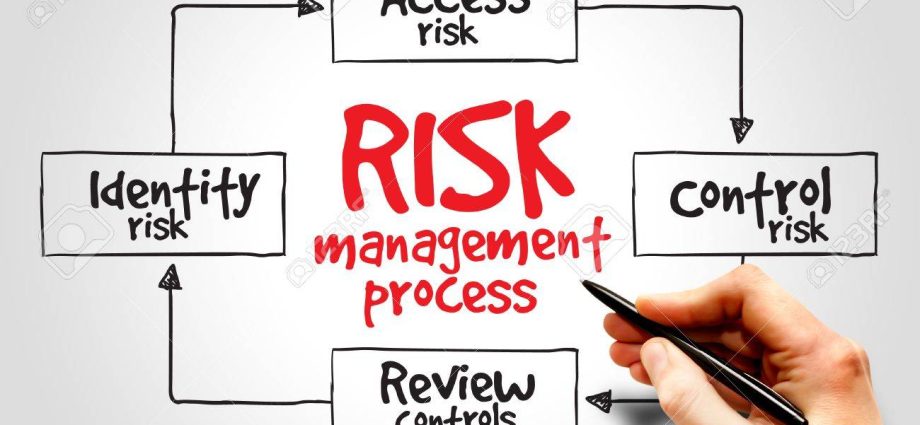

Let’s be honest. When you hear “bankroll management,” you probably think of poker chips or a casino floor. And “risk assessment”? That sounds like a corporate spreadsheet exercise. But here’s the deal: these concepts are secretly running your life. Every major choice—changing careers, buying a house, starting a family, investing in yourself—is a bet you place with your time, money, and emotional energy.
So, what if we stole the smartest psychological frameworks from high-stakes domains and applied them to our everyday, non-gambling lives? The goal isn’t to eliminate risk. That’s impossible. It’s to play the long game with your resources so you can stay in it, learn, and ultimately win on your own terms.
Your Life Bankroll Isn’t Just Cash
First, we need to reframe “bankroll.” In life, your bankroll is your total pool of resources. It’s your savings, sure. But it’s also your mental bandwidth, your emotional resilience, your time, and even your social capital. You’re constantly making withdrawals and deposits.
A classic poker principle is the “5% rule”—never risk more than 5% of your total bankroll on a single hand. It’s a guardrail against ruin. Translating this to, say, a career pivot might mean: don’t burn all your savings, sever all professional ties, and dive into a startup with zero testing. That’s risking 100% of your bankroll on one hand. Instead, you’d…
- Risk a smaller percentage: Use 10% of your savings for a course, or 20% of your weekly time to build a side project.
- Protect your core: Ensure essentials (rent, food, health) are covered by a stable income stream. That’s your “non-negotiable stack.”
- Diversify your bets: Just like an investor, don’t put all your identity-eggs in one basket. Nurture different skills, relationships, and interests. They’re your hedge funds.
The Mental Models That Clear the Fog
Our brains are notoriously bad at judging risk. We overestimate dramatic, unlikely events (plane crashes) and underestimate slow, creeping ones (career stagnation). These frameworks help correct our vision.
1. Expected Value (EV): Thinking in Probabilities, Not Possibilities
EV is the average outcome of a decision if you could make it a thousand times. You multiply the value of each potential outcome by its probability. The key? A positive EV decision can still lose, and a negative EV one can still win—in the short run. Life is about consistently making positive EV moves.
Example: Asking for a raise. There’s a probability (say, 60%) you get a $10k raise, a 30% chance you get nothing, and a 10% chance things get awkward. The crude EV calculation nudges you to see it’s likely worthwhile. It shifts you from “What if they say no?” to “Over the course of my career, advocating for my value pays off.”
2. Pre-Mortem & Pre-Parade: A Double Vision
This is a powerful one-two punch. A pre-mortem asks: “Imagine it’s a year from now and this decision failed catastrophically. Why did it fail?” You proactively identify vulnerabilities. Then, flip it. Hold a pre-parade: “It’s a year from now and this is the best decision I ever made. What went right?” This isn’t just naive optimism; it reveals the conditions for success you need to cultivate.
3. The Kelly Criterion (or a Softer Version)
In investing, the Kelly Criterion is a formula for sizing your bets based on your edge. The math can get complex, but the spirit is golden: Bet more when the odds are strongly in your favor, and less when they’re uncertain. In life, this means going “all-in” only when you have deep, validated conviction—not just a hunch. For most big life decisions, you’re in “fractional Kelly” territory: take a meaningful step, gather data, then adjust your position.
Practical Applications: Where the Rubber Meets the Road
Okay, enough theory. How does this actually feel in real time? Let’s map it to common modern pain points.
The Career Leap
You’re miserable in your job. The gamble: quit outright vs. a phased approach. A risk-managed, bankroll-conscious strategy looks like this table—a way to visualize your bets:
| Your “Bet” | Resource Risked (Bankroll %) | Potential Payout | Psychological Safety Net |
| Network & research new fields | Low (time, social energy) | Clarity, contacts | No financial risk, reversible |
| Upskill with a certified course | Medium (some $, weekend time) | Hard skills, confidence boost | Skill stays with you even if pivot changes |
| Freelance or consult on the side | Medium-High (nights & weekends) | Portfolio, real income test | Proves demand; builds runway |
| Quit with no plan | Extremely High (entire financial & emotional bankroll) | Freedom (short-term) | None. High stress, potential for panic moves. |
Major Financial Purchases
Buying a home, a car, that dream vacation. The emotional pull is huge. Apply a simple bankroll rule: the transaction should not deplete your core bankroll (emergency funds, retirement contributions) beyond a set threshold. A common personal finance guideline is the 28/36 rule for debt, but psychologically, ask: “Will paying for this force me to take a negative-EV job later if I get unlucky?” If yes, size the bet down.
The Human Element: When Logic Meets Emotion
All this sounds neat, right? But we’re not Spock. Fear, excitement, and social pressure cloud our judgment. That’s why the final framework is self-awareness. You have to know your own personal risk tolerance—which, by the way, isn’t fixed. It changes with age, responsibilities, and even your sleep quality.
Create a simple “emotional audit” checklist before any big decision. Ask: Am I running toward something or away from something? Is this FOMO or genuine alignment? Am I mentally discounting the real costs? Just pausing for this 2-minute drill can save you from a classic “tilt” move—where emotion overrides strategy.
Playing the Infinite Game
In the end, managing your life’s bankroll isn’t about timid living. It’s the opposite. It’s about having the resources and resilience to take more smart swings. To see life not as a single hand of poker, but as an infinite game you’re designing as you go.
The most successful people, honestly, aren’t the reckless risk-takers. They’re the ones who understand the psychology of risk. They make bold moves, sure, but they’ve always calculated how to live to fight another day—preserving their capital, their passion, and their peace of mind for the next meaningful bet. That’s the real win.